Pengembangan Bahan Ajar Numerasi Berbasis Wisata Jawa Barat untuk Penalaran Kritis Siswa SD
DOI:
https://doi.org/10.35706/sjme.v10i2.13373Kata Kunci:
Bahan Ajar Kontekstual, Numerasi, Penalaran Kritis, Sekolah Dasar, Wisata Jawa BaratAbstrak
Penelitian ini bertujuan mengembangkan bahan ajar numerasi berbasis konteks pariwisata Jawa Barat untuk mendukung kemampuan penalaran kritis siswa sekolah dasar. Penelitian menggunakan metode research and development dengan tahapan analisis kebutuhan, perancangan produk, pengembangan, validasi ahli, serta uji coba terbatas pada siswa kelas IV dan V di beberapa sekolah dasar. Produk yang dihasilkan berupa modul numerasi, LKPD, dan panduan guru yang mengintegrasikan konsep pengukuran, estimasi, serta operasi aritmetika dasar dengan konteks destinasi wisata lokal. Hasil validasi menunjukkan bahan ajar berada pada kategori sangat valid dan memperoleh respon sangat praktis dari guru maupun siswa. Implementasi bahan ajar juga meningkatkan kemampuan numerasi siswa, ditunjukkan oleh peningkatan skor post-test sebesar 25% dibandingkan pre-test. Siswa lebih mampu menyelesaikan masalah kontekstual seperti perencanaan perjalanan dan perhitungan biaya wisata secara kritis. Simpulan penelitian ini menunjukkan bahwa bahan ajar numerasi berbasis pariwisata Jawa Barat efektif, valid, dan praktis untuk mendukung pembelajaran numerasi serta penalaran kritis siswa sekolah dasar.
Unduhan
Referensi
Blumenfeld, P. C., Soloway, E., Marx, R. W., & Krajcik, J. S. (1991). Motivating project-based learning: Sustaining the doing, supporting the learning. Educational Psychologist, 26(3–4), 369–398. https://doi.org/10.1080/00461520.1991.9653139
Boaler, J. (2016). Mathematical mindsets. Jossey-Bass.
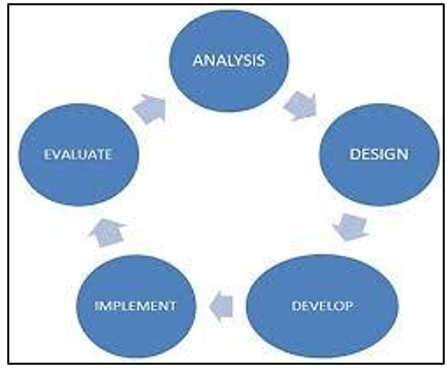
Branch, R. M. (2020). Instructional design: The ADDIE approach. Springer. https://doi.org/10.1007/978-0-387-09506-6
Brown, R., Schmitt, M., & Peterson, S. (2020). Numeracy and mathematics in everyday contexts. Educational Studies in Mathematics, 104(2), 187–205.
Condliffe, B., Quint, J., Visher, M. G., Bangser, M. R., Drohojowska, S., Saco, L., & Nelson, E. (2017). Project-based learning: A literature review. MDRC.
Creswell, J. W., & Creswell, J. D. (2018). Research design: Qualitative, quantitative, and mixed methods approaches (5th ed.). Sage Publications.
Culture, M. of E. and. (2020). Emergency curriculum implementation guide: Literacy and numeracy. Directorate General of Early Childhood Education, Primary Education, and Secondary Education.
Darling-Hammond, L., Flook, L., Cook-Harvey, C., Barron, B., & Osher, D. (2020). Implications for educational practice of the science of learning and development. Applied Developmental Science, 24(2), 97–140. https://doi.org/10.1080/10888691.2018.1537791
Geiger, V., Goos, M., & Forgasz, H. (2015). A critical orientation to numeracy across the curriculum. ZDM Mathematics Education, 47(4), 611–623. https://doi.org/10.1007/s11858-014-0648-1
Hmelo-Silver, C. E. (2016). Problem-based learning: What and how do students learn? Educational Psychology Review, 28(1), 1–12. https://doi.org/10.1023/B:EDPR.0000034022.16470.F3
Kokotsaki, D., Menzies, V., & Wiggins, A. (2016). Project-based learning: A review of the literature. Improving Schools, 19(3), 267–277. https://doi.org/10.1177/1365480216659733
Kurniawati, T. (2020). Implementation of project-based learning to improve critical thinking skills of elementary school students. Journal of Basic Education, 12(1), 45–56.
Lithner, J. (2017). Principles for designing mathematical tasks that enhance imitative and creative thinking. ZDM Mathematics Education, 49(6), 937–949. https://doi.org/10.1007/s11858-017-0867-3
Ministry of Education, Culture, Research, and Technology. (2022). Kurikulum Merdeka: Panduan pembelajaran dan asesmen.
Moschkovich, J. (2018). Building on students’ mathematical thinking in context. Journal for Research in Mathematics Education, 49(2), 148–165.
NCTM. (2020). Catalyzing change in early childhood and elementary mathematics. National Council of Teachers of Mathematics.
OECD. (2019). OECD future of education and skills 2030. OECD Publishing.
OECD. (2020). PISA 2018 results: What students know and can do (Volume I). OECD Publishing. https://doi.org/10.1787/5f07c754-en
OECD. (2022). PISA 2022 mathematics framework. OECD Publishing. https://doi.org/10.1787/dfe0bf9c-en
Pang, J., & Kim, O. K. (2016). Supporting students’ mathematical modeling competencies. Educational Studies in Mathematics, 93(3), 293–312. https://doi.org/10.1007/s10649-016-9705-3
Rayanto, Y. H., Supriyo, & Sugianti. (2020). Applying objectivist instructional design of addie model on learning reading comprehension. Proceedings of the International Conference on Community Development (ICCD 2020), 795–799. https://doi.org/10.2991/assehr.k.201017.175
Richey, R. C., & Klein, J. D. (2020). Design and development research: Methods, strategies, and issues. Routledge. https://doi.org/10.4324/9780203826034
Sari, D., & Putra, Z. (2021). Contextual numeracy learning to improve elementary students’ critical thinking. Journal of Mathematics Education, 12(1), 55–68.
Schukajlow, S., Kaiser, G. & Stillman, G. Empirical research on teaching and learning of mathematical modelling: a survey on the current state-of-the-art. ZDM Mathematics Education 50, 5–18 (2018). https://doi.org/10.1007/s11858-018-0933-5
Setiawan, H. (2022). Local context-based teaching materials to improve learning effectiveness in elementary school. Journal of Primary Education Studies, 8(2), 115–128.
Setiawan, H., & Indrawati, R. (2021). Problem-based learning model to improve the critical thinking skills of elementary school students. Journal of Basic Education, 17(2), 211–228.
Stacey, K. (2015). The Real World and the Mathematical World. In: Stacey, K., Turner, R. (eds) Assessing Mathematical Literacy. Springer, Cham. https://doi.org/10.1007/978-3-319-10121-7_3
Steen, L. A. (2017). Numeracy: The new literacy for a data-drenched society. Routledge.
Stillman, G., Brown, J., & Galbraith, P. (2016). Research into mathematical applications and modeling. Springer. https://doi.org/10.1007/978-981-10-1419-2_14
Sullivan, P., Clarke, D., & Clarke, B. (2021). Teaching with challenging tasks. Journal of Mathematics Teacher Education, 24(2), 105–128. https://doi.org/10.1007/s10857-020-09491-7
Tout, D. (2020). Evolution of numeracy and quantitative literacy. Numeracy, 13(1), 1–15. https://doi.org/10.5038/1936-4660.13.1.1838
Tout, D., & Gal, I. (2015). Perspectives on numeracy: Reflections and challenges. ZDM Mathematics Education, 47(4), 691–702. https://doi.org/10.1007/s11858-015-0672-9
Widodo, A., & Kurniasih, F. (2021). The effectiveness of local context-based learning in improving the literacy and numeracy of elementary school students. Journal of Mathematics Education, 11(2), 134–145.
Wulandari, T. (2020). The effect of project-based teaching materials on the numeracy skills of elementary school students. Journal of Innovative Education, 14(3), 99–107.
Unduhan
Diterbitkan
Cara Mengutip
Terbitan
Bagian
Citation Check
Lisensi
Hak Cipta (c) 2026 Eka Firmansyah, Achmad Mudrikah, Siti Nurhayati, Feri Husada Susanto, Melinda Putri Mubarika

Artikel ini berlisensiCreative Commons Attribution-ShareAlike 4.0 International License.
Hak cipta dilindingi undang-undang berdasarkan Undang-undang Nomor 28 Tahun 2014 tentang Hak Cipta. Dilarang memperbanyak isi jurnal ini, baik sebagian maupun seluruhnya dalam bentuk apapun tanpa izin tertulis dari SJME (Supremum Journal of Mathematics Education) sebagai pemegang Hak Cipta terhadap seluruh isi dari jurnal tersebut.
Penulis yang menerbitkan jurnal ini setuju dengan persyaratan berikut:
- Penulis mempertahankan hak cipta dan memberikan hak jurnal tentang publikasi pertama dengan karya yang secara bersamaan dilisensikan di bawah Lisensi Atribusi Creative Commons yang memungkinkan orang lain membagikan karya tersebut dengan pengakuan dari karya penulis dan publikasi awal dalam jurnal ini.
- Penulis dapat memasukkan pengaturan kontrak tambahan yang terpisah untuk distribusi non-eksklusif dari versi terbitan jurnal tersebut (misalnya, kirimkan ke repositori institusional atau publikasikan dalam sebuah buku), dengan sebuah pengakuan atas publikasi awalnya di Jurnal ini.
- Penulis diizinkan dan didorong untuk memposting pekerjaan mereka secara online (misalnya di repositori institusional atau di situs web mereka) sebelum dan selama proses penyampaian, karena dapat menyebabkan pertukaran yang produktif, serta kutipan karya yang diterbitkan sebelumnya dan yang lebih lama.