Design Research on Realistic Mathematics Education Using Sedekah Rame to Develop Students’ Number Sense
DOI:
https://doi.org/10.35706/sjme.v10i1.13313Keywords:
PMRI, RME, Number sense, Sedekah rame, Design researchAbstract
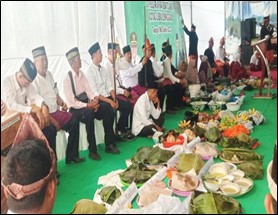
The dominance of procedural learning in mathematics highlights the need for contextual learning to develop students’ number sense. This study aims to develop a realistic mathematics education learning design based on the local cultural context of Sedekah Rame to enhance junior high school students’ number comprehension. This research employed a validation design research method through three stages: preliminary design, teaching experiments, and retrospective analysis. The participants were 8th-grade students of SMP Negeri 3 Lubuklinggau. Data were collected using observation sheets, student worksheets, interviews, field notes, and documentation. Qualitative data analysis was conducted through data reduction, data display, and conclusion drawing with triangulation to ensure validity. The learning design focused on four indicators of number sense: estimation, mental calculation, assessment of numerical magnitude, and assessment of result rationality. The findings show that the Sedekah Rame context provides meaningful mathematical situations and supports the emergence of flexible numerical strategies. However, the development of number comprehension requires strong conceptual understanding and continuous learning experiences. The findings indicate that the Sedekah Rame cultural context supports the development of students’ number sense by encouraging flexible numerical reasoning. However, strengthening conceptual understanding and providing continuous, well-structured learning experiences are essential to achieve more consistent improvement.
Downloads
References
Abreu-Mendoza, R. A., & Gunderson, E. (2025). Early Nonsymbolic Proportional Estimation Strategies and Their Contributions to Math Achievement. https://doi.org/10.31234/osf.io/3vwex_v1
Adamuz-Povedano, N., Fernández-Ahumada, E., García-Pérez, M. T., & Montejo-Gámez, J. (2021). Developing Number Sense: An Approach to Initiate Algebraic Thinking in Primary Education. Mathematics, 9(5), 518. https://doi.org/10.3390/math9050518
Akker, J., Gravemeijer, K., McKenney, S., & Nieveen. (2006). Educational Design Research. Routledge Raylor and Francis Group.
Andriani, D., Widada, W., Herawaty, D., Ardy, H., Nugroho, K. U. Z., Ma’rifah, N., Anggreni, D., & Anggoro, A. F. D. (2020). Understanding the Number Concepts through Learning Connected Mathematics (CM): A Local Cultural Approach. Universal Journal of Educational Research, 8(3), 1055–1061. https://doi.org/10.13189/ujer.2020.080340
Bakker, A. (2018). Design Research in Education (1st ed.). Routledge. https://doi.org/10.4324/9780203701010
Bakker, A., & Van Eerde, H. A. A. (2015). An introduction to design-based research with an example from statistics education. In A. Bikner-Ahsbahs, C. Knipping, & N. Presmeg (Eds.), Approaches to qualitative research in mathematics education: Examples of methodology and methods (pp. 429–466). New York: Springer.
Fadilah, E. R., Nugraha, A., & Marissa, E. I. (2024). Learning Trajectory of Arithmetic Sequences and Series with a PMRI Approach Using the Context of Yogyakarta’s Kawung Batik Fabric. Journal of Society and Development, 4(2), 12–18. https://doi.org/10.57032/jsd.v4i2.292
Fauzi, L. M., Gazali, M., Fauzi, A., Wardi, Z., & Endriana, N. (2022). Realistic mathematics education: Building mathematical conceptions in sasak culture. Jurnal Math Educator Nusantara: Wahana Publikasi Karya Tulis Ilmiah Di Bidang Pendidikan Matematika, 8(2), 155–167. https://doi.org/10.29407/jmen.v8i2.18885
Fauziah, A., & Pandra, V. (2024). Analyzing Elementary School Students’ Misconceptions in Number Sense Using a Five-Tier Diagnostic Test. Jurnal Riset Pendidikan Matematika, 11(2), 134–144. https://doi.org/https://doi.org/10.21831/jrpm.v11i2.76086.
Fauziah, A., Putri, R. I. ., Zulkardi, Z., & Somakim, S. (2020). Developing pmri learning environment through lesson study for pre-service primary school teacher. Journal on Mathematics Education, 11(2), 193–208. https://doi.org/10.22342/jme.11.2.10914.193-208
Fitriasari, P., Nurlaelah, E., & Hidayat, T. (2024). Number Sense: Flexibility in Thinking about Numbers. The Eurasia Proceedings of Educational and Social Sciences, 169–178. https://doi.org/10.55549/epess.812
Hadi, S. (2015). Number sense: berpikir fleksibel dan intuisi tentang bilangan. Jurnal Pendidikan Matematika, 1(1), 1–7.
Hastuti, M., & Setyaningrum, W. (2023). Analisis kemampuan number sense siswa smp dalam meyelesaikan soal numerasi model akm berbasis penalaran. Aksioma: Jurnal Program Studi Pendidikan Matematika, 12(2), 2363. https://doi.org/10.24127/ajpm.v12i2.7065
Hurst, C., & Hurrell, D. (2020). Multiplicative Thinking: ‘Pseudo-procedures’ are Enemies of Conceptual Understanding. International Electronic Journal of Mathematics Education, 15(3), em0611. https://doi.org/10.29333/iejme/8567
Lin, Y. C., Yang, D. C., & Li, M. . (2016). Diagnosing Students’ Misconceptions in Number Sense via a Web-Based Two-Tier Test. Eurasia Journal of Mathematics, Science and Technology Education, 12(1), 41–55. https://doi.org/https://doi.org/10.12973/eurasia.2016.1420a
Maghfirah, M., & Mahmudi, A. (2018). Number sense: the result of mathematical experience. Journal of Physics: Conference Series, 1097, 012141. https://doi.org/10.1088/1742-6596/1097/1/012141
McIntosh, A., J, R. B., & Reys, R. E. (1992). A Proposed framework for examining basic number sense. In Subject Learning in Primary Curriculum (pp. 209–221).
Mendrofa, R. ., Fauzi, K. M. A., & Sitompul, P. (2024). Eksplorasi Keterkaitan antara Kearifan Lokal dan Kemampuan Pemecahan Masalah Matematika. Kognitif: Jurnal Riset HOTS Pendidikan Matematika, 4(1), 601–612. https://doi.org/10.51574/kognitif.v4i1.1693
Muna, K., Sudargo, Pramadyahsari, A. S., & Nursyahidah, F. (2024). Desain Pembelajaran Bangun Ruang Sisi Lengkung Bola Menggunakan PMRI Berbantuan Adobe Animate. Journal on Education, 06(04), 18191–18201. http://jonedu.org/index.php/joe
Naresh, N., & Poling, L. (2015). Statistical education: a context for critical pedagogy. In S. Mukhopadhyay & B. Greer (Eds.), the 8th International Conference of Mathematics, Education, and Society (pp. 820–833).
Nasir, R. (2018). Identifying the students ’ proportional reasoning. International Journal of Educational Science and Research (IJESR), 8(2), 71–78. https://doi.org/https://doi.org/10.24247/ijesrapr201811
Nichols, R. M. (2025). High Ability, Hidden Gaps: Building Quantitative Reasoning amongst Singapore’s Mathematically Literate. Numeracy, 18(2). https://doi.org/10.5038/1936-4660.18.2.1488
Nursyahidah, F., Saputro, B. A., & Albab, I. U. (2021). Desain Pembelajaran Kerucut Berkonteks Tradisi Megono Gunungan. Jurnal Elemen, 7(1), 14–27. https://doi.org/10.29408/jel.v7i1.2655
Plomp. (2013). Educational Design Research: An Introduction. In Educational Design Research (pp. 10–15). SLO.
Prahmana, R. C. I. (2022). Ethno-Realistic Mathematics Education: The promising learning approach in the city of culture. SN Social Sciences, 2(12), 257. https://doi.org/10.1007/s43545-022-00571-w
Rahayu, A. P., Putri, R. I. I., & Darmawijoyo, D. (2018). Learning Process of Decimals through the Base Ten Strips at the Fifth Grade. International Journal of Instruction, 11(3), 153–162. https://doi.org/10.12973/iji.2018.11311a
Rahmawati, R. ., Sulistyani, R., Purnomo, Y. ., Fitriya, Y., & Ramadhani, D. (2023). Relationship between Elementary School Students’ Numeracy and Number Sense. The New Educational Review, 74(4), 73–88. https://doi.org/10.15804/tner.23.74.4.06
Rosa, M., & Orey, D. C. (2024). Exploring cultural dynamism of ethnomodelling as a pedagogical action for students from minority cultural groups. ZDM – Mathematics Education, 56(3), 423–434. https://doi.org/10.1007/s11858-023-01539-7
Sanita, E., Zulkardi, Z., Susanti, E., & Meryansumayeka, M. (2024). Desain Pembelajaran Refleksi Geometri Menggunakan Pendekatan PMRI dengan Konteks Songket Prada Palembang. Indiktika : Jurnal Inovasi Pendidikan Matematika, 7(1), 246–260. https://doi.org/10.31851/indiktika.v7i1.17196
Serrazina, L., & Rodrigues, M. (2021). Number Sense and Flexibility of Calculation: A Common Focus on Number Relations. In A. G. Spinillo, S. L. Lautert, & R. E. d. S. . Borba (Eds.), Mathematical Reasoning of Children and Adults. Springer, Cham. https://doi.org/https://doi.org/10.1007/978-3-030-69657-3_2
Siligar, E. I. ., Putri, R. I. I., Zulkardi, Z., & Hapizah, H. (2025). Exploring Palembang Cultural Context through PMRI in Mathematics Learning: A Systematic Literature Review. Inomatika, 7(2), 238–256. https://doi.org/10.35438/inomatika.v7i2.504
Sohilait, E., & Sidik, M. K. (2025). Desain Pembelajaran Matematika Menggunakan Pendekatan PMRI Dengan Konteks Budaya Masohi Pada Materi Perbandingan Senilai. Theorema: The Journal Education of Mathematics, 6(19–29).
Susilo, A., Sari, R. W., & Satinem, Y. (2024). History Learning for Students Through Lubuklinggau Local History Study Tour Activities. LANGGAM: International Journal of Social Science Education, Art and Culture, 3(2), 1–7. https://doi.org/10.24036/langgam.v3i2.190
Vanluydt, E., Degrande, T., Verschaffel, L., & Van Dooren, W. (2020). Early stages of proportional reasoning: a cross-sectional study with 5- to 9-year-olds. European Journal of Psychology of Education, 35(3), 529–547. https://doi.org/10.1007/s10212-019-00434-8
Widyawati, W., Putri, R. I. ., & Somakim. (2016). Desain pembelajaran sudut menggunakan konteks rumah limas di kelas VII. JINoP, Jurnal Inovasi Pembelajaran), 2(2), 437–448. https://doi.org/10.22219/jinop.v2i2.3489
Yang, D. ., & Wu, W. . (2010). The Study of Number Sense: Realistic Activities Integrated into Third-Grade Math Classes in Taiwan. The Journal of Educational Research, 103(6), 379–392. https://doi.org/https://doi.org/10.1080/00220670903383010
Yang, D. C., & Lin, Y. C. (2015). Assessing 10- to 11-year-old children’s performance and misconceptions in number sense using a four-tier diagnostic test. Educational Research, 57(4), 368–388. https://doi.org/10.1080/00131881.2015.1085235
Yuda, E. K., & Rosmilawati, I. (2024). Literasi Numerasi di Sekolah Dasar Berdasarkan Indikator PISA 2023; Systematic Literatur Review. Journal of Instructional and Development Researches, 4(3), 172–191. https://doi.org/10.53621/jider.v4i3.326
Zulkardi, & Putri, R. I. I. (2019). New School Mathematics Curricula, PISA and PMRI in Indonesia (pp. 39–49). https://doi.org/10.1007/978-981-13-6312-2_3
Downloads
Published
How to Cite
Issue
Section
Citation Check
License
Copyright (c) 2026 Anna Fauziah, Dona Ningrum Mawardi

This work is licensed under a Creative Commons Attribution-ShareAlike 4.0 International License.
Authors who publish with this journal agree to the following terms:
- Authors retain copyright and grant the journal right of first publication with the work simultaneously licensed under a Creative Commons Attribution License that allows others to share the work with an acknowledgment of the work's authorship and initial publication in this journal.
- Authors are able to enter into separate, additional contractual arrangements for the non-exclusive distribution of the journal's published version of the work (e.g., post it to an institutional repository or publish it in a book), with an acknowledgment of its initial publication in this journal.
- Authors are permitted and encouraged to post their work online (e.g., in institutional repositories or on their website) prior to and during the submission process, as it can lead to productive exchanges, as well as earlier and greater citation of published work (See The Effect of Open Access).