Students’ Procedural Fluency in Fraction Addition through Built-in Definition Fraction Media
DOI:
https://doi.org/10.35706/sjme.v10i1.13205Keywords:
fraction, procedural fluency, fraction addition, concrete learning media, least common multipleAbstract
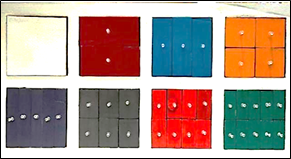
This study aims to describe elementary students’ procedural fluency in solving fraction addition problems using the built-in definition fraction media. Fraction operations are often challenging for students, particularly when determining common denominators and applying calculation procedures accurately. These difficulties are commonly associated with weak procedural understanding and limited opportunities to use concrete learning media. This descriptive study involved 30 fourth-grade students from SDN 204 Palembang who had previously learned basic fraction concepts. Data were collected through a written test consisting of three levels of procedural fluency tasks and supported by interviews to explore students’ reasoning processes. The results show that 47% of students were able to solve fraction addition problems with denominators (Level 1), 33% managed tasks involving adjustment of one denominator (Level 2), and only 13% successfully solved problems requiring the determination of the least common multiple of denominators (Level 3). These findings indicate that students’ procedural fluency development is not linear but constrained at transition points from concrete visual manipulation to abstract procedural reasoning. While the built-in definition fraction media effectively supported early procedural stages by strengthening visual–procedural connections, it was less effective in facilitating higher-level abstraction required for complex fraction operations. The study contributes to procedural fluency literature by identifying specific procedural transition points where students begin to experience difficulties.
Downloads
References
Abdullah, F. S., & Yunianta, T. N. H. (2018). Pengembangan Media Pembelajaran Matematika Trigo Fun Berbasis Game Edukasi Menggunakan Adobe Animate Pada Materi Trigonometri. AKSIOMA: Jurnal Program Studi Pendidikan Matematika, 7(3), 434. https://doi.org/10.24127/ajpm.v7i3.1586
Afianti, N., Sugilar, H., & Susilawati, W. (2022). Improving Students ’ Procedural Mathematics Fluency Skills through Microsoft Mathematics. Jurnal Pendidikan Matematika. 10(2), 85–94.
Beeler, N., Ziegler, E., Volz, A., Navarini, A. A., & Kapur, M. (2023). The effects of procedural and conceptual knowledge on visual learning. Advances in Health Sciences Education, 29(4), 1243–1263. https://doi.org/10.1007/s10459-023-10304-0
Creswell, J. W. (2019). Research Design: Qualitative, Quantitative, and Mixed Method Approaches. Sage Publications.
Fatrina, A., Nuraeni, Z., Mulyono, B., Yukans, S. S., & Mansur, N. (2023). Kemampuan representasi matematis siswa kelas VII menggunakan Problem Based Learning berbantuan E-LKPD. SJME (Supremum Journal of Mathematics Education), 7(2). https://doi.org/10.35706/sjme.v9i1.187
Gusti, I., Ngurah, A., Jayantika, T., Made, N., & Andini, P. (2022). Media pembelajaran berbasis Edpuzzle pada pembelajaran matematika. Jurnal Edukasi Matematika dan Sains, 11(2), 1–10. https://edpuzzle.com/
Imaroh, N. A., Pujiastuti, H., & Matematika, J. P. (2021). Analisis kesulitan siswa SD kelas IV dalam menyelesaikan soal operasi hitung pecahan. Jurnal Penelitian Pendidikan dan Pembelajaran Matematika, 7(2), 87–96. https://doi.org/10.37058/jp3m.v7i2.3167
Karna, S. D., Adrias, A., & Zulkarnaini, A. P. (2025). Efektivitas dan tantangan penggunaan media pembelajaran interaktif di sekolah dasar. Jurnal Pendidikan Dasar, 3, 319–325.
Li, H.-C. (2025). Examining procedural proficiency in fraction addition: Comparative insights from England and Taiwan. International Journal of Instruction, 18(1), 325–340. https://doi.org/10.29333/iji.2025.18118a
Muharani, A., Kurniadi, E., & Araiku, J. (2025). Kemampuan representasi matematis siswa dalam pembelajaran pemodelan matematika pada materi aplikasi program linear. SJME (Supremum Journal of Mathematics Education), 9(1), 61–73. https://doi.org/10.35706/sjme.v9i1.186
Muqtafia, A. C., Kurniawati, A. I., Amanda, F. M., & Setiawaty, R. (2022). Analisis kesulitan belajar matematika dan cara mengatasinya pada siswa sekolah dasar: Tinjauan literature review. Prosiding Seminar Nasional LPPM UMMAT, 1, 296–309. http://journal.ummat.ac.id/index.php/semnaslppm/article/view/9660
Nurfatah, F. (2025). Innovation in mathematics learning media. Indonesian Journal of Innovation Studies, 26(4), 1–13. https://doi.org/10.21070/ijins.v26i4.1537
Nursella, N. (2024). Pengaruh penggunaan media pembelajaran interaktif terhadap hasil belajar siswa SD. EDUCARE: Jurnal Pendidikan dan Kesehatan, 4, 54–66. https://doi.org/10.70437/jedu.v2i1.14
Oktasari, N., Syahrilfuddin, S., & Putra, Z. H. (2023). Kesulitan siswa dalam menyelesaikan soal operasi penjumlahan pecahan: Studi kasus di kelas V SDN 67 Pekanbaru. Primary Education Journal Silampari, 4(1), 7–16. https://doi.org/10.31540/pejs.v4i1.2067
Pratidiana, D., & Muhayatun, N. (2021). Analisis kelancaran prosedural matematis siswa dalam menyelesaikan soal program linear. UNION: Jurnal Ilmiah Pendidikan Matematika, 9(2), 189–201. https://doi.org/10.30738/union.v9i2.9369
Purba, E. H. (2020). Kendala dalam pembelajaran penjumlahan pecahan. Jurnal Ilmiah Pendidikan Matematika (JIPM), 1(1), 13–25. https://doi.org/10.56854/jipm.v1i1.89
Purnawan, P., & Hidayati, D. (2021). Pelatihan dan penerapan e-learning dan m-learning di SMK Muhammadiyah Minggir Sleman. Surya Abdimas, 5(1), 41–46. https://doi.org/10.37729/abdimas.vi.866
Rauzatul Narita, Kadir, A., & Anwar, N. (2022). Penerapan etnomatematika kerajinan Aceh pada materi geometri untuk meningkatkan pemahaman konsep siswa. Ar-Riyadhiyyat: Journal of Mathematics Education, 2(2), 103–109.
Rukono, R., Raharjo, T. J., & Pramono, S. E. (2025). Effectiveness of manipulative media in improving learning outcomes of fraction addition in elementary school. International Journal of Education, Information Technology and Others, 8, 89–95.
Safitri, A., & Lestari, K. E. (2022). Analisis kelancaran prosedural matematis siswa berdasarkan kemandirian belajar. Jurnal Educatio FKIP UNMA, 8(2), 444–452. https://doi.org/10.31949/educatio.v8i2.1979
Sartika, N. S., & Sujana, A. (2022). Analisis kemampuan kelancaran prosedural matematis siswa MTs Mathla’ul Anwar Sukaresmi. Jurnal Pendidikan Matematika, 40, 40–52.
Syukra, S. K., Adrias, A., & Syam, S. S. (2025). Kesulitan siswa dalam memahami materi pecahan pada pembelajaran matematika di sekolah dasar: A systematic literature review. Jurnal Pendidikan Matematika, 1–15. https://doi.org/10.62383/bilangan.v3i2.449
Zuliana, E. (2025). Meningkatkan kemampuan berhitung penjumlahan menggunakan media manik-manik matematika siswa kelas I SD Negeri 8 Metro Barat. Jurnal Pendidikan Dasar, 1–23.
Downloads
Published
How to Cite
Issue
Section
Citation Check
License
Copyright (c) 2026 Jelita Herdia Siregar, Darmawijoyo, Septy Sari Yukans, Rahma Siska Utari

This work is licensed under a Creative Commons Attribution-ShareAlike 4.0 International License.
Authors who publish with this journal agree to the following terms:
- Authors retain copyright and grant the journal right of first publication with the work simultaneously licensed under a Creative Commons Attribution License that allows others to share the work with an acknowledgment of the work's authorship and initial publication in this journal.
- Authors are able to enter into separate, additional contractual arrangements for the non-exclusive distribution of the journal's published version of the work (e.g., post it to an institutional repository or publish it in a book), with an acknowledgment of its initial publication in this journal.
- Authors are permitted and encouraged to post their work online (e.g., in institutional repositories or on their website) prior to and during the submission process, as it can lead to productive exchanges, as well as earlier and greater citation of published work (See The Effect of Open Access).