Development of an Electronic Module to Improve Mathematical Representation in Two Variable Linear Equations
DOI:
https://doi.org/10.35706/sjme.v10i1.13190Keywords:
Electronic Module, Concrete-Representational-Abstract, Representation Ability, SPLDVAbstract
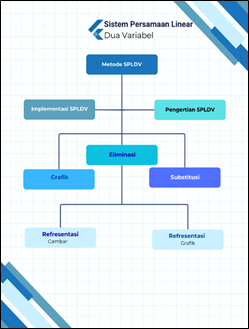
This study aims to develop an HTML5 Package-based E-Module on the material of Two-Variable Linear Equation System (SPLDV) which is valid and practical on, the results of the mathematical representation test of students solving SPLDV problems on 12 students obtained an average score of 75 in the good category. The research method used is Research and Development with a 4D development model, which includes the Define, Design, Develop, and Disseminate stages. Data collection techniques through media validation tests through media and material expert validation forms, mathematical representation tests, questionnaire distribution. Data analysis by calculating the percentage of media and material expert assessments, and calculating questionnaire responses and mathematical representation test scores. The results of the media expert review show that the validity of the e-module from the media and material aspects is very valid. The practicality test on a large scale shows a percentage of 78.91% which is classified as practical. Student responses to this module are very good. In addition, the test results for 12 students showed an average score of 75 for completing SPLDV questions, which is considered good. Overall, it was concluded that the developed HTML5 Package-based SPLDV e-Module met the criteria for validity, practicality, and effectiveness for use in learning.
Downloads
References
Agrisa, F., Nuraeni, Z., & Sari, N. (2025). Mathematical representation ability of VIII grade students in linear equation using math literacy-based E-module. Jurnal Math Educator Nusantara: Wahana Publikasi Karya Tulis Ilmiah Di Bidang Pendidikan Matematika, 11(1), 33–41. https://doi.org/10.29407/jmen.v11i1.21819
Aisy, D. R., Farida, F., & Andriani, S. (2020). Pengembangan e-modul berbantuan Sigil software dengan pendekatan saitifik pada materi sistem persamaan linier dua variabel (SPLDV). Edu Sains: Jurnal Pendidikan Sains Dan Matematika, 8(1), 61–71. https://doi.org/10.23971/eds.v8i1.1499
Borg, W. R., & Gall, M. D. (1983). Educational Research: An Introduction. British Journal of Educational Studies, 49(3), 362–365.
Butler, F. M., Miller, S. P., Crehan, K., Babbitt, B., & Pierce, T. (2003). Fraction instruction for students with mathematics disabilities: Comparing two teaching sequences. Learning Disabilities Research & Practice, 18(2), 99–111.
Darhim. (2014). Dasar-dasar Pengetahuan tentang Media Pembelajaran Matematika. Workshop Matematika, 1–41.
Darhim, D. (2022). Sistem Persamaan Linier Dua Variabel (SPLDV): Membangun, Solusi, Koneksi. PPT Kuliah Pendidikan Matematika Kontemporer.
Duval, R. (2017). Understanding the mathematical way of thinking-The registers of semiotic representations. Springer.
Farhan, E., & Umbara, U. (2021). Implementasi Pembelajaran Berbasis Multimedia Terhadap Kemampuan Representasi Matematika. SJME (Supremum Journal of Mathematics Education), 5(1). https://doi.org/10.35706/sjme.v5i1.3949
Fatrina, A., Nuraeni, Z., Mulyono, B., Yukans, S. S., & Mansur, N. (2025). Kemampuan Representasi Matematis Siswa Kelas VII Menggunakan Problem Based Learning Berbantuan E-LKPD. SJME (Supremum Journal of Mathematics Education), 9(1), 197–213. https://doi.org/10.35706/sjme.v9i1.187
Gardenia, N., Herman, T., Juandi, D., Dahlan, T., & Kandaga, T. (2021). Analysis of mathematical communication skills of class 8 students on two-variable linear equation systems (SPLDV) concept. Journal of Physics: Conference Series, 1806(1), 12073. https://doi.org/10.1088/1742-6596/1806/1/012073
Gay, L. R., Mills, G. E., & Airasian, P. (2012). Educational Research Competencies for Analysis and Applications. Tenth Edition. In Jurnal Sains dan Seni ITS.
Goldin, G. A. (2003). Representation in school mathematics: A unifying research perspective. A Research Companion to Principles and Standards for School Mathematics, 275–285.
Husna, K., & Supriyadi, S. (2023). Peranan Manajeman Media Pembelajaran Untuk Meningkatkan Motivasi Belajar Siswa. AL-MIKRAJ Jurnal Studi Islam Dan Humaniora (E-ISSN 2745-4584), 4(1), 981–990. https://doi.org/10.37680/almikraj.v4i1.4273
Kariadinata, R., Juariah, Sugilar, H., & Nurdiansyah, R. (2018). Cara Mudah Membuat dan Menggunakan Alat Peraga Matematika.
Mahendra, N. R., Mulyono, M., & Isnarto, I. (2019). Kemampuan Representasi Matematis dalam Model Pembelajaran Somatic, Auditory, Visualization, Intellectually (SAVI). PRISMA, Prosiding Seminar Nasional Matematika, 2, 287–292.
Maryani, A., & Setiawan, W. (2021). Analisis Kesulitan Peserta Didik Kelas VIII dalam Menyelesaikan Soal Sistem Persamaan Linear Dua Variabel (SPLDV) di MTs Atsauri Sindangkerta. Jurnal Cendekia: Jurnal Pendidikan Matematika, 5(3), 2619–2627. https://doi.org/10.31004/cendekia.v5i3.915
Maryati, I., & Suryaningsih, F. (2021). Kemampuan Representasi Matematis Ditinjau dari Kemandirian Belajar dengan Model Pembelajaran Berbasis Masalah dan Inkuiri. Prisma, 10(2), 244–254. https://doi.org/10.35194/jp.v10i2.1308
Muharani, A., Kurniadi, E., & Araiku, J. (2025). Kemampuan Representasi Matematis Siswa dalam Pembelajaran Pemodelan Matematika pada Materi Aplikasi Program Linear. SJME (Supremum Journal of Mathematics Education), 9(1), 61–73. https://doi.org/10.35706/sjme.v9i1.186
Pathuddin, P., Hamidah, D., Panggalo, S., Hakim, Z. A., Suwardin, M., Bakri, B., & Awuy, E. (2024). Students’ Polya problem solving skills on system of linear equations with two variables bases on mathematical ability. AIP Conference Proceedings, 3046(1).
Salsabila, S., Anriani, N., & Santosa, C. A. H. F. (2023). Pengembangan e-modul pada android menggunakan kodular untuk meningkatkan kemampuan representasi matematis siswa. Teorema: Teori Dan Riset Matematika, 8(1), 1–10. https://doi.org/10.25157/teorema.v8i1.8704
Sani, L. D. Y., Santia, I., & Katminingsih, Y. (2020). Analisis Kemampuan Representasi Matematis Siswa SMA pada Materi Trigonometri. Universitas Nusantara PGRI Kediri.
Saputra, Y. P., Wulandari, N. P., & Hikmah, N. (2023). Kemampuan Pemecahan Masalah Matematika Siswa pada Materi Sistem Persamaan Linear Dua Variabel. Journal of Classroom Action Research, 5(1), 85–94.
Setiadi, T., & Zainul, R. (2019). Pengembangan E-Modul Asam Basa Berbasis Discovery Learning Untuk Kelas XI SMA/MA. EduKimia, 1(1), 21–27. https://doi.org/10.24036/ekj.v1i1.104019
Sugilar, H. (2019). Multimedia Matematika di Era Digital. SENTER 2019: Seminar Nasional Teknik Elektro 2019, November 2019, 442–451.
Sugilar, H., Mangkuwibawa, H., & Yudhiantara, R. A. (2023). Computer Technology-Based MBKM To Develop Mathematics Education Students’ Metacognition and Metasklill Perspective. 8(2), 106–116.
Sugiyono, D. (2013). Metode Penelitian Kuantitatif, Kualitatif, dan R&D.
Sukandi, H. R., Rahayu, Y. N., & Safitri, N. R. (2024). Penggunaan Alat Peraga dalam Meningkatkan Minat Belajar Matematika Siswa. 8(1), 70–80.
Susilawati, W., Maryono, I., & Maimunah, S. (2018). The development of Adobe Flash-based interactive multimedia to enhance students ’ mathematical communication skills. https://doi.org/10.1088/1757-899X/434/1/012011
Taufiq, D. A. (2022). Kemampuan pemecahan masalah matematis siswa smp pada materi sistem persamaan linear dua variabel. Plusminus: Jurnal Pendidikan Matematika, 2(2), 303–314. https://doi.org/10.31980/plusminus.v2i2.1106
Tetriyani, E., Jihad, A., Rachmawati, T. K., & Sugilar, H. (2024). Development of video animation media for learning a system two-variable linear equation. KnE Social Sciences, 423–430. https://doi.org/10.18502/kss.v9i8.15575
Thiagarajan, S., Semmel, D. S., & Semmel, M. I. (1974). Instructional development for training teachers of exceptional children: A Sourcebook. Journal of School Psychology, 14(1), 75. https://doi.org/10.1016/0022-4405(76)90066-2
Umam, M. A., & Zulkarnaen, R. (2022). Analisis kemampuan pemahaman konsep matematis siswa dalam materi sistem persamaan linear dua variabel. Jurnal Educatio FKIP UNMA, 8(1), 303–312. https://doi.org/10.31949/educatio.v8i1.1993
Witzel, B. S. (2005). Using CRA to teach algebra to students with math difficulties in inclusive settings. Learning Disabilities: A Contemporary Journal, 3(2), 49–60.
Downloads
Published
How to Cite
Issue
Section
Citation Check
License
Copyright (c) 2026 Hamdan Sugilar, Iyon Maryono, Wahyudin Wahyudin, Sani Insan Muhamadi

This work is licensed under a Creative Commons Attribution-ShareAlike 4.0 International License.
Authors who publish with this journal agree to the following terms:
- Authors retain copyright and grant the journal right of first publication with the work simultaneously licensed under a Creative Commons Attribution License that allows others to share the work with an acknowledgment of the work's authorship and initial publication in this journal.
- Authors are able to enter into separate, additional contractual arrangements for the non-exclusive distribution of the journal's published version of the work (e.g., post it to an institutional repository or publish it in a book), with an acknowledgment of its initial publication in this journal.
- Authors are permitted and encouraged to post their work online (e.g., in institutional repositories or on their website) prior to and during the submission process, as it can lead to productive exchanges, as well as earlier and greater citation of published work (See The Effect of Open Access).