From Traditional to Digital: A Mini Review on Flipped Classroom in Mathematics Education
DOI:
https://doi.org/10.35706/sjme.v10i1.13143Keywords:
Flipped Classroom, Mathematics Education, Student Engagement, Learning StrategiesAbstract
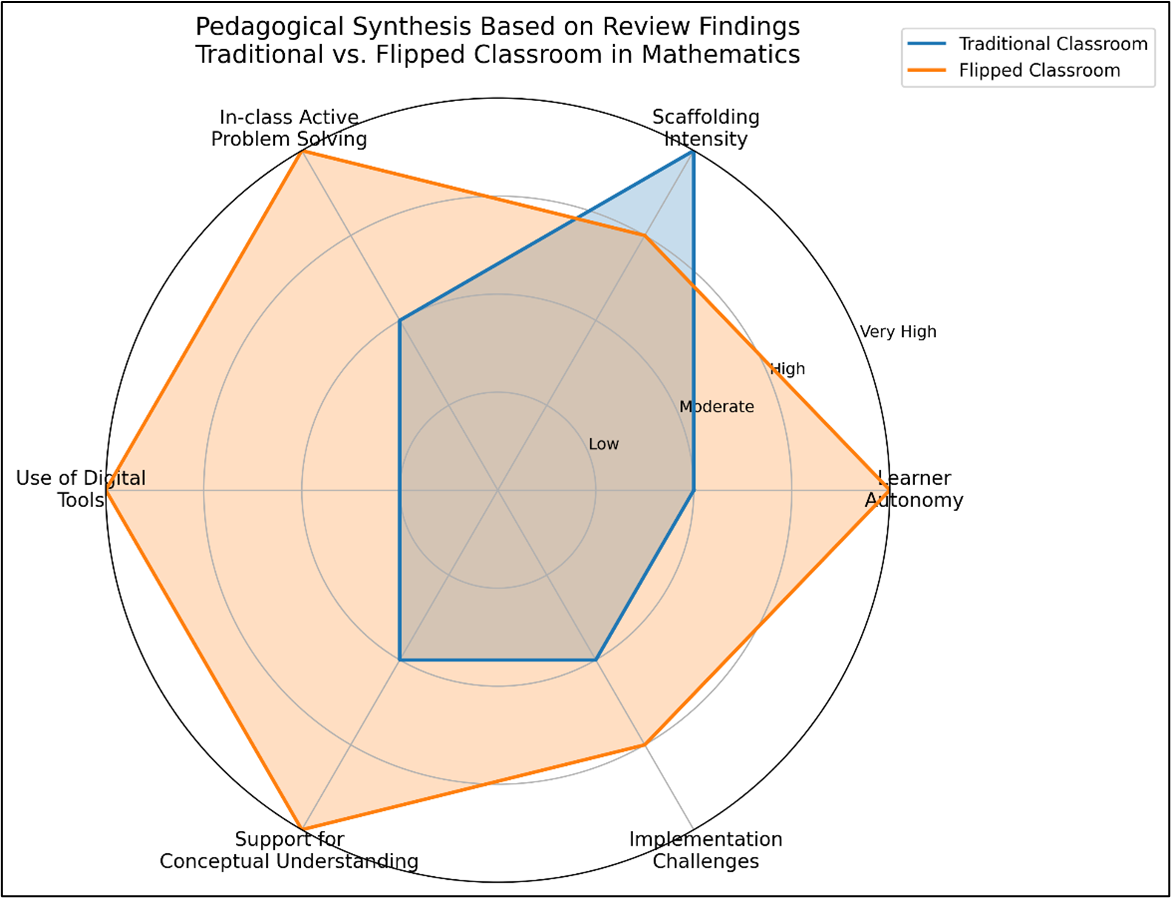
The flipped classroom is an instructional innovation that has been increasingly implemented in mathematics education. This model transforms traditional instruction by delivering learning materials outside the classroom through videos or reading resources, while class time is devoted to interactive activities such as discussion and problem solving. This mini-review aims to analyze the implementation of the flipped classroom in mathematics education, its impact on student engagement and learning outcomes, the challenges encountered, and strategies for effective implementation. The study adopts a mini-review approach with a systematic study selection process. Articles were retrieved from Scopus, Web of Science, and Google Scholar, covering publications from 2015 to 2024. Of the 134 articles identified, 27 studies were selected through title, abstract, and full-text screening. The findings indicate that flipped classroom implementation varies across educational levels. At the primary level, its effectiveness depends on scaffolding and adult support, whereas at the secondary and higher education levels, the flipped classroom enhances student engagement, conceptual understanding, and learning outcomes, despite challenges related to self-regulated learning readiness and unequal access to technology. Compared to traditional instruction, the flipped classroom emphasizes learner autonomy, in-class problem-solving activities, and the use of digital technologies, while requiring strong instructional design and institutional support to be effective.
Downloads
References
Al-Samarraie, H., Shamsuddin, A., & Alzahrani, A. I. (2020). A flipped classroom model in higher education: a review of the evidence across disciplines. Educational Technology Research and Development, 68(3), 1017–1051. https://doi.org/10.1007/s11423-019-09718-8
Alshehri, A. M. (2017). Employing active learning and the flipped classroom model in developing countries: opportunities and challenges. Flipped Instruction: Breakthroughs in Research and Practice, 73-87. https://doi.org/10.4018/978-1-4666-9680-8.ch014
Altemueller, L., & Lindquist, C. (2017). Flipped classroom instruction for inclusive learning. British Journal of Special Education, 44(3), 341–358. https://doi.org/10.1111/1467-8578.12177
Bego, C. R., Ralston, P. A. S., & Thompson, A. K. (2022). Improving performance in a large flipped barrier mathematics course: a longitudinal case study. International Journal of Mathematical Education in Science and Technology, 53(7), 1916–1933. https://doi.org/10.1080/0020739X.2020.1850899
Braun, V., & Clarke, V. (2006). Using thematic analysis in psychology. Qualitative Research in Psychology, 3(2), 77–101.
Buhl-Wiggers, J., la Cour, L., & Kjærgaard, A. L. (2023). Insights from a randomized controlled trial of flipped classroom on academic achievement: the challenge of student resistance. International Journal of Educational Technology in Higher Education, 20(1). https://doi.org/10.1186/s41239-023-00413-6
Chellapan, L., & van der Meer, J. (2016). Challenges in implementing the flipped classroom model in higher education. In Handbook of research on active learning and the flipped classroom model in the digital age (pp. 352–365). IGI Global. https://doi.org/10.4018/978-1-4666-9680-8.ch018
Chew, B.-S., Cheah, S.-M., Tran, T., Binh, H. D., & Van Truong, T. (2020). Comparing sdl in singapore and vietnam: approaches and student perceptions. In M. J., B. J., E. K., K. N., S. A., R. J., S. I., & S. M. (Eds.), Proceedings of the International CDIO Conference (Vol. 1, pp. 147–159). Chalmers University of Technology.
Chun, T. W., & Sathappan, R. (2020). Using flipped classroom approach to teach adjectives for Malaysian year 4 Chinese ESL learners. The English Teacher, 49(1).
Cuetos, M. J. (2023). Application of the flipped classroom model to stimulate university students’ learning with online education. Journal of Technology and Science Education, 13(1), 368–380. https://doi.org/10.3926/jotse.1806
De Jaegher, L. (2020). What is the impact of the flipping the classroom instructional e-learning model on teachers. Вопросы образования, (2 (eng)), 175-203. https://doi.org/10.17323/1814-9545-2020-2-175-203
Gough, D., Thomas, J., & Oliver, S. (2017). An introduction to systematic reviews.
Şahin, E. (2020). Using the flipped classroom model in the history course: A learning experience. International Journal of Educational Methodology, 6(1). https://doi.org/10.12973/ijem.6.1.11
Fardian, D., Suryadi, D., & Prabawanto, S. (2025). A praxeological analysis of linear equations in Indonesian mathematics textbooks: Focusing on systemic and epistemic aspect. Journal on Mathematics Education, 16(1 SE-Articles), 225–254. https://doi.org/10.22342/jme.v16i1.pp225-254
Fardian, D., Suryadi, D., Prabawanto, S., & Jupri, A. (2025). (Re)Conceptualizing Linear Equations: A Snapshot from Teaching and Learning in Indonesia. Jurnal Ilmiah Ilmu Terapan Universitas Jambi, 9(3), 1205–1226. https://doi.org/10.22437/jiituj.v9i3.37450
Fardian, D., Suryadi, D., Prabawanto, S., & Jupri, A. (2025). Integrating Chat-GPT in the Classroom: A Study on Linear Algebra Learning in Higher Education. International Journal of Information and Education Technology, 15(4). https://doi.org/10.18178/ijiet.2025.15.4.2279
Fernández-Martín, F.-D., Romero-Rodríguez, J.-M., Gómez-García, G., & Navas-Parejo, M. R. (2020). Impact of the flipped classroom method in the mathematical area: A systematic review. Mathematics, 8(12), 1–11. https://doi.org/10.3390/math8122162
Fung, C.-H., Besser, M., & Poon, K.-K. (2021). Systematic Literature Review of Flipped Classroom in Mathematics. Eurasia Journal of Mathematics, Science and Technology Education, 17(6), 1–17. https://doi.org/10.29333/ejmste/10900
Fung, C.-H., Poon, K.-K., Besser, M., & Fung, M.-C. (2024). Improving short-term academic performance in the flipped classroom using dynamic geometry software. Journal of Computer Assisted Learning, 40(2), 775–786. https://doi.org/10.1111/jcal.12914
Gong, J., Cai, S., & Cheng, M. (2024). Exploring the Effectiveness of Flipped Classroom on STEM Student Achievement: A Meta-analysis. Technology, Knowledge and Learning, 29(2), 1129–1150. https://doi.org/10.1007/s10758-023-09700-7
Güler, M., Kokoç, M., & Önder Bütüner, S. (2023). Does a flipped classroom model work in mathematics education? A meta-analysis. Education and Information Technologies, 28(1), 57–79. https://doi.org/10.1007/s10639-022-11143-z
Haavold, P. O. (2019). To what extent does flipped classroom affect students’ mathematical knowledge and conceptions of mathematics? Acta Didactica Norge, 13(1). https://doi.org/10.5617/adno.4797
Hao, Y. (2016). Exploring undergraduates’ perspectives and flipped learning readiness in their flipped classrooms. Computers in Human Behavior, 59, 82–92. https://doi.org/10.1016/j.chb.2016.01.032
Hashim, H. I. C., Yaakob, T. Z., Fuzi, N. M., & Hasan, M. Z. (2024). Strategies for successful implementation. In Flipped Classrooms and Learning: Perspectives, Opportunities and Challenges (pp. 55–61). Nova Science Publishers, Inc. https://doi.org/10.52305/BWLK7711
Herman, T., Amalia, R., Gee, E., Juandi, D., Turmudi, & Roesdiana, L. (2025). Analisis Jalur Pengaruh Self Awareness dan Self Efficacy Terhadap Prestasi Belajar Matematika Siswa . SJME (Supremum Journal of Mathematics Education), 9(1 SE-Article), 1–13. https://doi.org/10.35706/sjme.v9i1.95
Hung, C.-Y., Sun, J. C.-Y., & Liu, J.-Y. (2019). Effects of flipped classrooms integrated with MOOCs and game-based learning on the learning motivation and outcomes of students from different backgrounds. Interactive Learning Environments, 27(8), 1028–1046. https://doi.org/10.1080/10494820.2018.1481103
Ishartono, N., Nurcahyo, A., Waluyo, M., Prayitno, H. J., & Hanifah, M. (2022). Integrating GeoGebra into the flipped learning approach to improve students’ self-regulated learning during the covid-19 pandemic. Journal on Mathematics Education, 13(1), 69–86. https://doi.org/10.22342/jme.v13i1.pp69-86
Juandi, D., Suparman, S., Putri, A. D., Dahlan, J. A., & Dasari, D. (2025). The utilization of computer-assisted mathematics education integrated into project-based learning to optimize Indonesian students’ mathematics achievement: A systematic review and meta-analysis. International Electronic Journal of Mathematics Education, 20(4), em0853. https://doi.org/10.29333/iejme/16899
Koribská, I., Chudý, Š., & Plischke, J. (2022). Benefits and limits of flipped classroom implementation in higher education. The New Educational Review, 70, 107-117.
Kreis, Y., Haas, B., Weinhandl, R., & Lavicza, Z. (2024). Transitioning from lectures to online flipped classrooms: enhancing pre-service teacher education in Luxembourg. Cogent Education, 11(1). https://doi.org/10.1080/2331186X.2024.2425895
Lai, C.-L., & Hwang, G.-J. (2016). A self-regulated flipped classroom approach to improving students’ learning performance in a mathematics course. Computers and Education, 100, 126–140. https://doi.org/10.1016/j.compedu.2016.05.006
Leuyacc, Y. R. S., & Parejas, J. L. C. (2021). Developing Student Understanding of Calculus Concepts through Flipped Classroom. Proceedings - 2021 16th Latin American Conference on Learning Technologies, LACLO 2021, 494–497. https://doi.org/10.1109/LACLO54177.2021.00087
Machmud, M. T., Irwan, M., Utami, N. M. T., Wattanachai, S., Samat, C., & Ikram, F. Z. (2024). The Digitalization Phenomenon in Indonesian Education: Progress, Challenges, and Government Strategies. In 2024 10th International Conference on Education and Technology (ICET) (pp. 209-216). IEEE.
Mncube, D. W., & Maphalala, M. C. (2023). Advancing Self-Directed Learning in Higher Education. In Advancing Self-Directed Learning in Higher Education. IGI Global. https://doi.org/10.4018/978-1-6684-6772-5
Nielsen, K. L. (2023). Why Can the Flipped Classroom Frustrate Students? Experiences from an Engineering Mathematics Course. Education Sciences, 13(4). https://doi.org/10.3390/educsci13040396
Nusantara, D. S., Pasaribu, F. T., Gustiningsi, T., & Abdullah, A. H. (2025). Developing Mind Mapping-Based Pocketbook with Augmented Reality to Support Creative Thinking Skills in Pre-Service Mathematics Teachers. SJME (Supremum Journal of Mathematics Education), 9(2 SE-Article), 297–317. https://doi.org/10.35706/sjme.v9i2.204
Page, M. J., McKenzie, J. E., Bossuyt, P. M., Boutron, I., Hoffmann, T. C., Mulrow, C. D., Shamseer, L., Tetzlaff, J. M., Akl, E. A., & Brennan, S. E. (2021). The PRISMA 2020 statement: an updated guideline for reporting systematic reviews. Bmj, 372. https://doi.org/10.1136/bmj.n71
Popay, J., Roberts, H., Sowden, A., Petticrew, M., Arai, L., Rodgers, M., Britten, N., Roen, K., & Duffy, S. (2006). Guidance on the conduct of narrative synthesis in systematic reviews. A Product from the ESRC Methods Programme Version, 1(1), b92. https://doi.org/10.13140/2.1.1018.4643
Putri, A. D., Juandi, D., Herman, T., & Turmudi. (2025). Investigating pedagogical strategies in mathematics education with flipbook integration: A qualitative analysis. AIP Conference Proceedings, 3316(1), 120010. https://doi.org/10.1063/5.0290040
Putri, A. D., Juandi, D., Jupri, A., & Muchsin, S. B. (2024). Mastering the TPACK framework: Innovative approaches by mathematics teachers. Jurnal Elemen, 10(3), 582–594. https://doi.org/10.29408/jel.v10i3.26311
Putri, A. D., Juandi, D., & Turmudi, T. (2024a). Blended Learning dalam Pembelajaran Matematika: A Systematic Literature Network Analysis. 7(3), 501–516. https://doi.org/10.22460/jpmi.v7i3.21992
Putri, A. D., Juandi, D., & Turmudi, T. (2024b). Realistic mathematics education and mathematical literacy: a meta-analysis conducted on studies in Indonesia. Journal of Education and Learning (EduLearn), 18(4), 1468–1476. https://doi.org/10.11591/edulearn.v18i4.21650
Putri, A. D., Juandi, D., Turmudi, T., & Suparman, S. (2025). Blended Learning and Math Achievement : A Meta-Analytic Review Highlighting the Effectiveness and Heterogeneity. Electronic Journal of E-Learning, 23(1), 113–128. https://doi.org/10.34190/ejel.23.1.3781
Sari, L. P., Handika, M., Rosita, E., Sari, M., Anggoro, B. S., & Putra, F. G. (2019). The Flipped Classroom Strategy using Learning Video: Applied toward the Ability to Understand Mathematical Concept. Journal of Physics: Conference Series, 1155(1). https://doi.org/10.1088/1742-6596/1155/1/012088
Schallert, S., Lavicza, Z., & Vandervieren, E. (2022). Towards Inquiry-Based Flipped Classroom Scenarios: a Design Heuristic and Principles for Lesson Planning. International Journal of Science and Mathematics Education, 20(2), 277–297. https://doi.org/10.1007/s10763-021-10167-0
Sandhu, N., Singh, D., & Sharma, S. (2021). Flipping the Business Classroom: Benefits and Challenges. International Journal of Sociotechnology and Knowledge Development (IJSKD), 13(3), 60-76. https://doi.org/10.4018/IJSKD.2021070104
Song, Y. (2020). How to flip the classroom in school students’ mathematics learning: bridging in- and out-of-class activities via innovative strategies. Technology, Pedagogy and Education, 29(3), 327–345. https://doi.org/10.1080/1475939X.2020.1749721
Vaičiūnienė, A., & Kazlauskienė, A. (2023). Liberating and Oppressive Factors for Self-Directed Learning: A Systematic Literature Review. Education Sciences, 13(10). https://doi.org/10.3390/educsci13101020
Villalba, M. T., Castilla, G., & Redondo Duarte, S. (2018). Factors with influence on the adoption of the flipped clasroom model in technical and vocational education.
Walsh, J. N. (2024). Using cluster analysis to identify procrastination and student learning strategies in a flipped classroom. International Journal of Management Education, 22(1). https://doi.org/10.1016/j.ijme.2024.100936
Downloads
Published
How to Cite
Issue
Section
Citation Check
License
Copyright (c) 2026 Amelia Defrianti Putri, Dadang Juandi, Margaretha Madha Melissa, Dilham Fardian, Al Jupri, Turmudi Turmudi

This work is licensed under a Creative Commons Attribution-ShareAlike 4.0 International License.
Authors who publish with this journal agree to the following terms:
- Authors retain copyright and grant the journal right of first publication with the work simultaneously licensed under a Creative Commons Attribution License that allows others to share the work with an acknowledgment of the work's authorship and initial publication in this journal.
- Authors are able to enter into separate, additional contractual arrangements for the non-exclusive distribution of the journal's published version of the work (e.g., post it to an institutional repository or publish it in a book), with an acknowledgment of its initial publication in this journal.
- Authors are permitted and encouraged to post their work online (e.g., in institutional repositories or on their website) prior to and during the submission process, as it can lead to productive exchanges, as well as earlier and greater citation of published work (See The Effect of Open Access).